
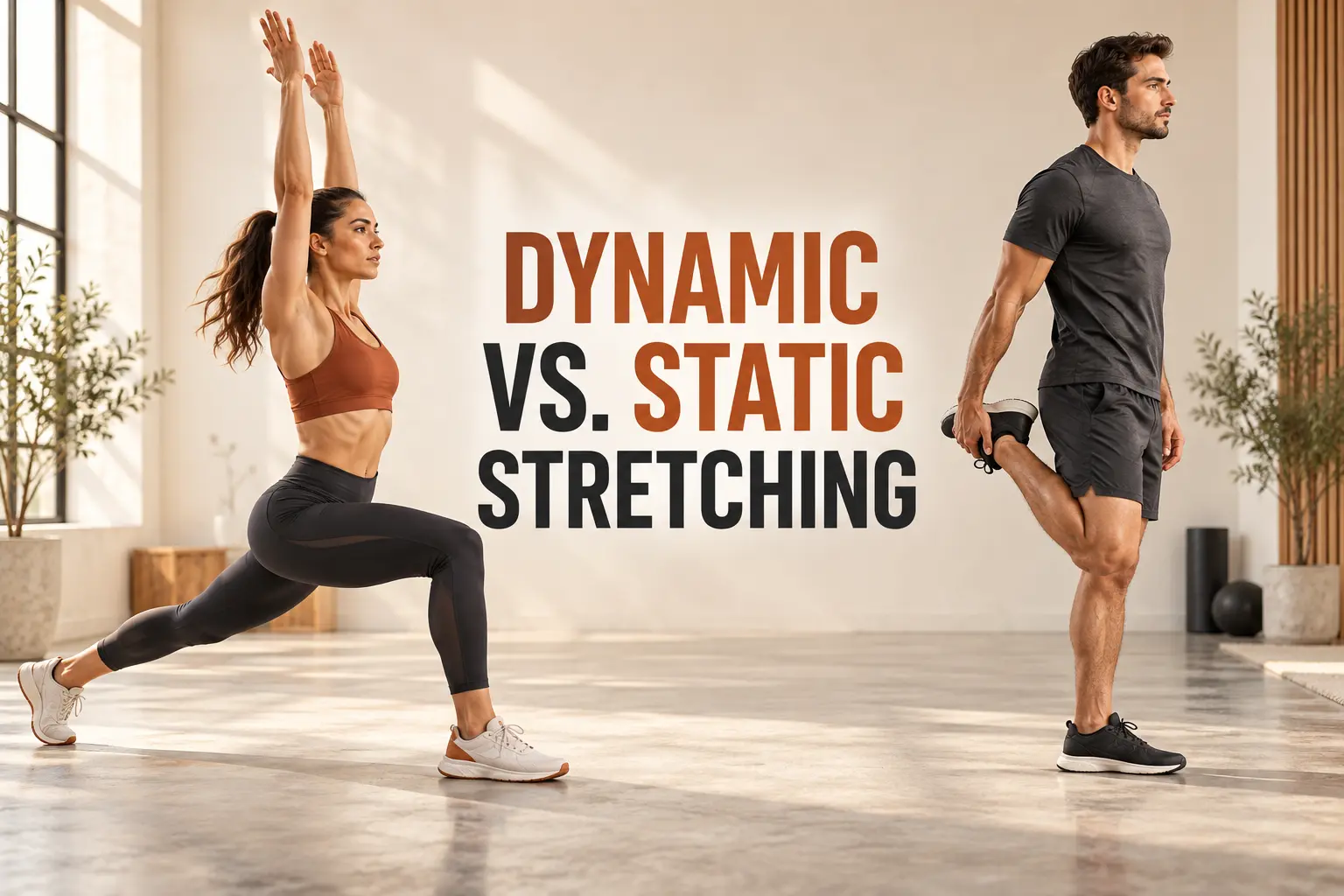
Dynamic and static stretching can both support better movement, but they serve different purposes. Dynamic stretching uses controlled movement to prepare your body for activity. Static stretching involves holding a position and is generally better suited to a cooldown or a separate flexibility session.
You do not need to choose one method and abandon the other. A complete movement routine can use both—as long as each type is placed where it makes the most sense.

Dynamic vs. Static Stretching at a Glance
| Feature | Dynamic stretching | Static stretching |
|---|---|---|
| Method | Controlled movement through a range of motion | Holding a position without bouncing |
| Best time | Before exercise or physical activity | After exercise or during a separate session |
| Primary purpose | Movement preparation and rehearsal | Flexibility work and comfortable range development |
| Typical duration | 5–10 controlled repetitions per movement | Approximately 15–30 seconds per position |
| Examples | Leg swings, arm circles and walking lunges | Calf, hamstring, quadriceps and chest stretches |
| Movement speed | Smooth and controlled | Still, relaxed and controlled |
What Is Dynamic Stretching?
Dynamic stretching moves a joint or muscle group repeatedly through a controlled range of motion. Rather than moving into one position and holding it, you continue moving through the exercise.
Examples include controlled leg swings, walking lunges, arm circles, ankle rocks and torso rotations. The movement should be deliberate rather than fast, jerky or uncontrolled.
Dynamic stretching may help you:
- Gradually increase your body temperature.
- Move joints through the ranges required by the activity.
- Rehearse exercise-specific movement patterns.
- Transition from rest to more demanding activity.
- Identify stiffness before adding speed or resistance.
Dynamic stretching is not:
- Uncontrolled bouncing at the end of your range.
- Moving as quickly as possible.
- Forcing a joint past a comfortable position.
- A replacement for gradual exercise-specific warm-up sets.
- A competition to see who can move the farthest.
When Should You Use Dynamic Stretching?
Dynamic stretching is generally most useful near the beginning of a workout. It can follow a few minutes of easy walking, cycling or another activity that gradually increases circulation and body temperature.
Your movements should become increasingly specific to the activity you are preparing to perform. For example:
- Before walking or hiking: ankle rocks, controlled leg swings and walking lunges.
- Before strength training: bodyweight squats, hip hinges, arm circles and light warm-up sets.
- Before running: marching, leg swings, controlled skips and progressive strides.
- Before balance training: ankle circles, heel raises and supported single-leg movements.
- Before upper-body training: shoulder circles, wall slides and controlled torso rotations.
What Is Static Stretching?
Static stretching involves moving into a position and holding it without bouncing. The goal is usually to create mild to moderate tension in the targeted muscle group while maintaining steady breathing and control.
A static stretch should not produce sharp pain, numbness, tingling or a feeling that the joint is being forced. The position should be stable enough that you can relax rather than struggle to avoid falling.
Examples of static stretches
- Standing or wall-supported calf stretch
- Seated or standing hamstring stretch
- Standing quadriceps stretch
- Hip-flexor stretch
- Doorway chest stretch
- Supported glute stretch
A typical starting point is to hold each position for approximately 15–30 seconds. Longer holds are not automatically better, especially when you cannot maintain relaxed breathing or stable alignment.
When Should You Use Static Stretching?
Static stretching generally fits best after activity or as part of a separate flexibility and mobility session. At those times, you can focus on maintaining a comfortable position without needing to produce maximum power immediately afterward.
Potential times to use static stretching include:
- After a workout as part of a gradual cooldown.
- Later in the day when addressing areas that feel consistently restricted.
- During a dedicated flexibility session.
- After an easy walk or other light activity that raises body temperature.
- Within a relaxation-focused evening movement routine.
If you are building a broader movement practice, our guide to mobility versus flexibility explains why passive flexibility is only one component of usable movement.
Should You Perform Static Stretching Before Exercise?
Static stretching before exercise is not automatically dangerous or forbidden. The concern is mainly about using prolonged, intense static holds immediately before activities that require maximum strength, speed or explosive power.
Long or aggressive holds can temporarily change how forcefully a muscle performs. The effect matters most when static stretching is the final activity before sprinting, jumping or heavy lifting.
If you enjoy brief static stretching before exercise, keep it comfortable and follow it with dynamic movement and activity-specific warm-up sets. For example, a short calf stretch could be followed by ankle rocks, heel raises and gradually more demanding walking or running drills.
Dynamic Stretching Examples
1. Controlled leg swings
Hold a stable support and swing one leg forward and backward through a comfortable range. Keep the torso tall and avoid using momentum to force the leg higher.
Try: 5–10 repetitions per leg.
2. Walking lunges
Step forward into a controlled lunge, push through the front foot and bring the back leg forward into the next repetition. Reduce the depth if balance or knee comfort becomes an issue.
Try: 5–8 repetitions per side.
3. Arm circles
Begin with small circles and gradually increase their size. Keep the ribs controlled instead of arching the lower back to create more shoulder movement.
Try: 5–10 circles in each direction.
4. Ankle rocks
Keep the heel down while guiding the knee forward over the foot. Move only as far as you can without the arch collapsing or the heel lifting.
Try: 8–10 controlled repetitions per side.
5. Torso rotations
Stand tall and rotate smoothly through the upper back while keeping the movement controlled. Avoid forcing the lower back into an excessive range.
Try: 5–8 repetitions per side.
Static Stretching Examples
1. Calf stretch
Place your hands against a wall and step one foot back. Keep the heel down and the foot pointing generally forward while gently shifting your weight toward the wall.
Try: Hold for 15–30 seconds per side.
2. Hamstring stretch
Extend one leg with the heel supported and hinge forward from the hips. Keep the back long and stop when you feel comfortable tension through the back of the thigh.
Try: Hold for 15–30 seconds per side.
3. Standing quadriceps stretch
Hold a stable support, bend one knee and bring the heel toward the hip. Keep the knees relatively close and avoid excessively arching the lower back.
Try: Hold for 15–30 seconds per side.
4. Doorway chest stretch
Place the forearm against a doorway and gently rotate your torso away until you feel tension across the chest and front of the shoulder.
Try: Hold for 15–30 seconds per side.
A Simple Warm-Up Using Dynamic Stretching
- Begin with 3–5 minutes of easy movement. Walk, pedal or perform another comfortable full-body activity.
- Mobilize the primary joints. Use ankle rocks, hip rotations, arm circles or similar controlled movements.
- Add movement patterns from the workout. Perform bodyweight squats, lunges, hinges or pressing motions as appropriate.
- Increase the intensity gradually. Add speed, range or resistance in small steps.
- Perform activity-specific warm-up sets. Practice the exercise before reaching your working intensity.
A Simple Post-Workout Static Stretching Routine
After gradually reducing your exercise intensity, select three to five areas that were heavily involved in the workout. Hold each stretch for approximately 15–30 seconds and repeat once if it feels useful.
A basic lower-body sequence could include:
- Calf stretch
- Hip-flexor stretch
- Quadriceps stretch
- Hamstring stretch
- Glute stretch
For a structured option that combines several movement patterns, try our 10-minute full-body mobility routine.
Common Stretching Mistakes
Moving too quickly during dynamic stretches
Dynamic does not mean uncontrolled. Slow the movement down if momentum begins determining your range.
Bouncing during static stretches
A static stretch should be held steadily. Repeated bouncing turns it into a different technique and can make the position more difficult to control.
Stretching into sharp pain
Mild tension is expected, but sharp pain, numbness or tingling is a signal to stop and reassess the movement.
Using random stretches that do not match the activity
A warm-up should prepare you for the movements ahead. Choose exercises that relate to the joints and patterns you are about to use.
Treating stretching as the complete warm-up
A good warm-up also includes gradual increases in body temperature, movement rehearsal and activity-specific preparation.
Frequently Asked Questions
Is dynamic stretching better than static stretching?
Neither is universally better. Dynamic stretching is usually more appropriate before activity, while static stretching generally works better after activity or in a separate flexibility session.
How long should a dynamic warm-up last?
Many people can complete an effective dynamic warm-up in approximately 5–10 minutes. The appropriate length depends on the activity, environment and intensity of the upcoming workout.
How long should you hold a static stretch?
A practical starting point is 15–30 seconds. The stretch should remain comfortable enough that you can breathe normally and maintain stable alignment.
Can you combine dynamic and static stretching?
Yes. You might use dynamic movement before a workout and static stretches afterward. During a separate mobility session, both methods can be combined according to your goals.
Does stretching prevent injuries?
Stretching alone cannot guarantee injury prevention. Appropriate training progression, recovery, strength, movement control and preparation all contribute to managing injury risk.
Is mobility the same as stretching?
No. Stretching can influence flexibility, while mobility also involves strength, coordination and control through a usable range of motion.
The Bottom Line
The simplest way to remember the difference is: move to prepare and hold to restore.
Use dynamic stretching before activity to raise your body temperature, rehearse movement patterns and prepare the joints you are about to use. Save longer static stretches for after the workout or a separate session focused on flexibility and comfortable range of motion.
Whichever method you choose, keep the movements controlled, progress gradually and avoid forcing your body into painful positions.
Continue Building Your Mobility
This article provides general educational information and is not individualized medical advice. Consult an appropriate healthcare professional if stretching causes persistent pain or if you are returning from an injury or surgery.
Leave a Reply